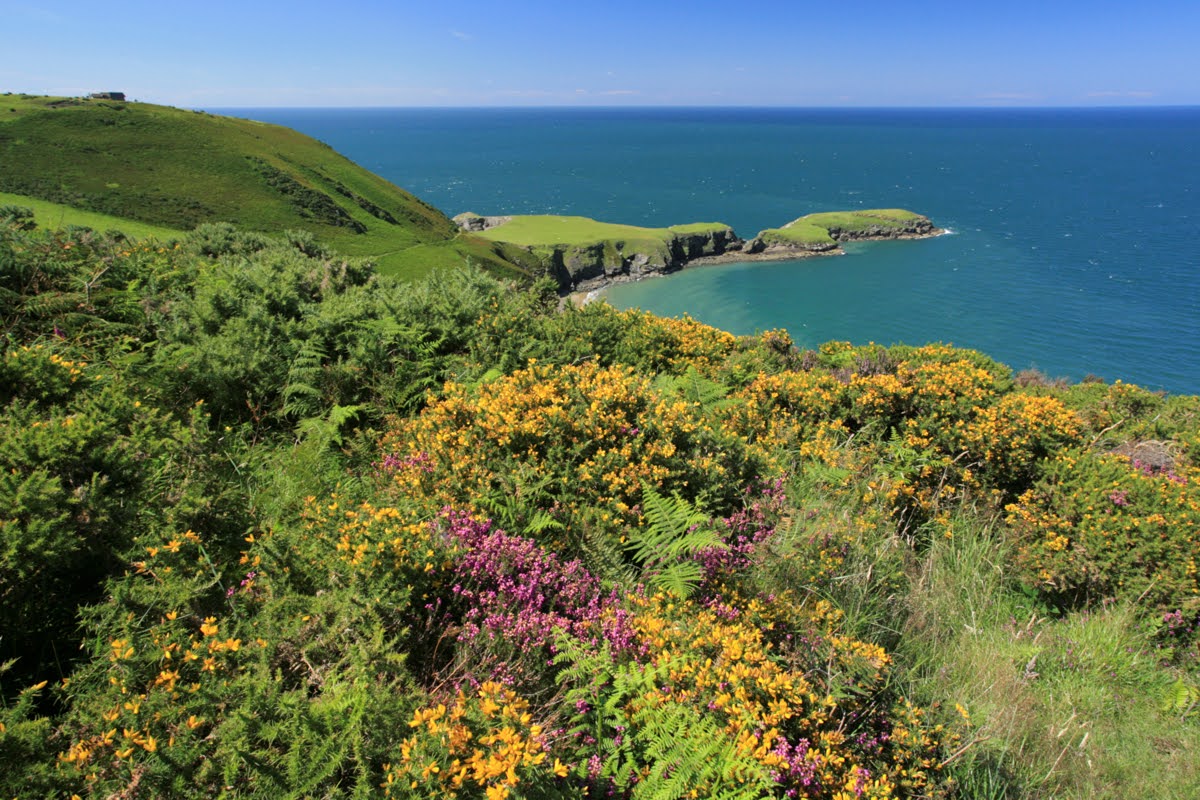
The wild flowers of the coast and countryside of Cardigan Bay Cardiganshire (Ceredigion) are a delight at every time of year, but especially in the spring when the lanes and footpaths are a mass of flowers.
There is an interesting film about the Arable Plants in Wales which is filmed at Mwnt and shows a wide range of rare flowers. More information can be found here on the Plantlife website.
I am adding to this directory of flowers in Ceredigion Wales, but if you can offer any help with corrections or further information please e-mail jane at cardigan-bay.com.
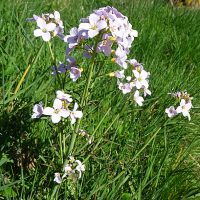
 CuckooFlowerCommon Name: Lady's Smock, Cuckoo Flower, Latin Name: Cardamine pratensiss Description: Herbaceous perennial plant growing up to 60 cm tall, with pinnate leaves 5–12 cm long, each leaflet is about 1 cm long. The delicate flowers are grouped into clusters on each stem and each individual flower has four petals and is 1–2 cm in diameter. Season: Spring - April to June Colour: Very pale lilac More Information: The name cuckoo flower comes from the timing of the flowering, at the same time as hearing the first cuckoo. Location: Along the banks of streams and rivers and in meadows and damp banks and hedges.
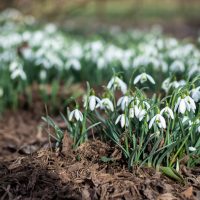
- SnowdropsCommon Name: Snowdrop - Eirlys in Welsh Latin Name: Galanthus nivalis Description: Perennial growing up to 25 cm tall, with narrow leaves forming clumps and one flower per stem Season: Early spring - January to March Colour: White with green More Information: The snowdrop is one of the first signs of spring sometimes appearing through the snow. Location: Woodland, roadside banks and graveyards - just about anywhere with shady areas below trees.
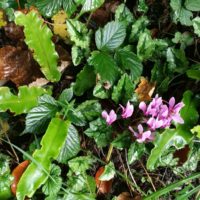
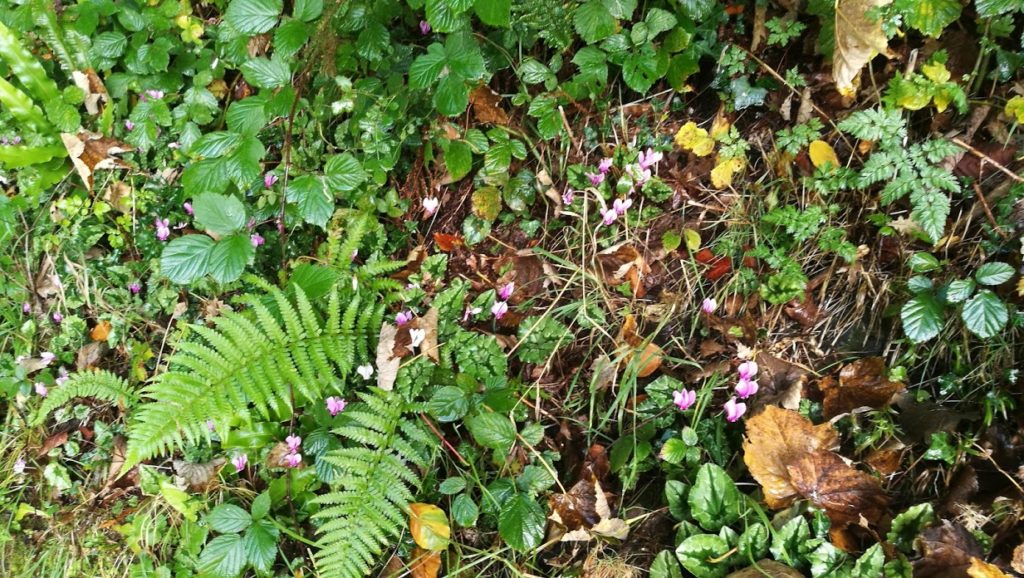
- CyclamenCommon Name: Wild Cyclamen or Sowbread Latin Name: Cyclamen hederifolium Description: Heart shaped ivy like leaves and rounded flower Season: autumn Colour: pink or white More Information: The common name of Sowbread is thought to originate from wild cyclamen being eaten by pigs. The name is similarly associated with pigs in eg France where it is called pain de pourceau. Location: Woodland, hedgerow and river banks. The flowers above were photographed in the lanes above the River Teifi
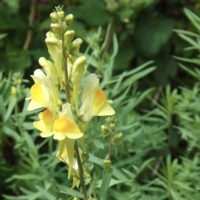
- Common ToadflaxCommon Name: Common Toadflax Latin Name: Linaria vulgaris Description: Long narrow leaves and growing up to 90 cm high into hedges. Season: June to [sometimes] November Colour: Yellow and gold into orange. More Information: A splash of spring colour as autumn approaches - similar in shape to Snapdragons. Location: Along the lanes and in banks under hedges throughout west Wales.
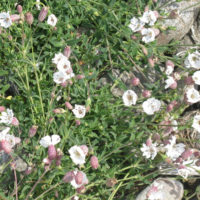
- Sea campionCommon Name: Sea campion Latin Name: Silene maritima Description: Five petals and about 6 inches high Season: Late May till September Colour: White and palest pink More Information: Can grow in the cliffs and tolerates salt Location: Along the coast paths
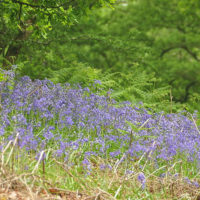
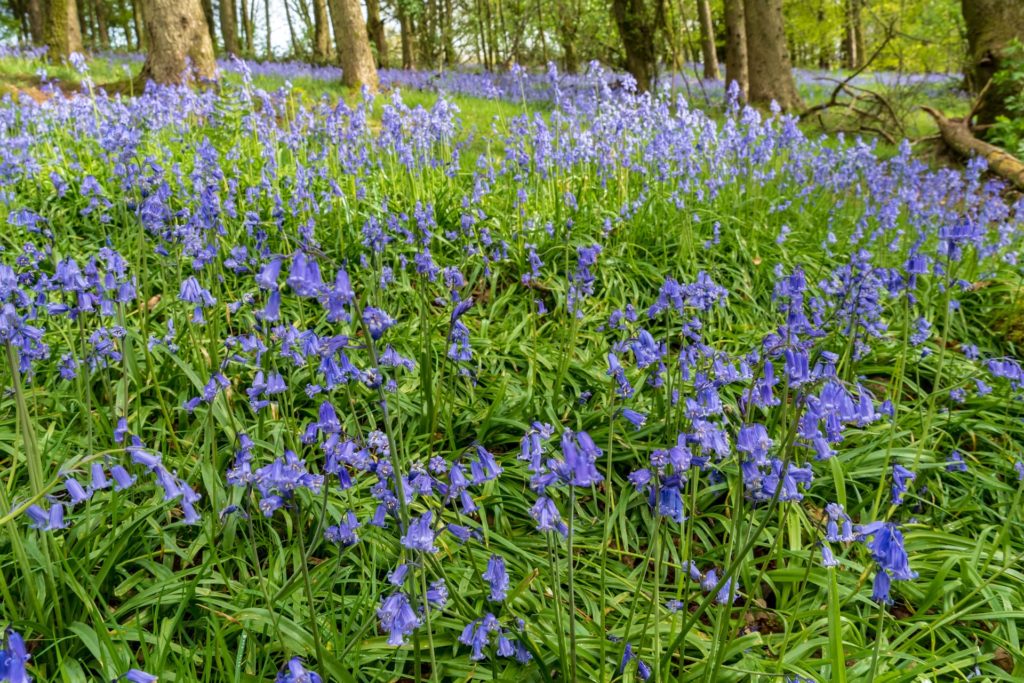
- BluebellsCommon Name: Bluebell Latin Name: Hyacinthoides non-scripta Description: Up to 20 bell shaped flowers on a sturdy stem. Wonderful perfume. Season: mid April to late May Colour: Blue, sometimes white More Information: Bluebells like the shade of woodland, but where the woods have gone, particularly on north facing slopes, they can still be found on open land - a memory of woodland. Location: Almost anywhere in west Wales but spectacularly on north facing coast slopes such as the one above Poppit Sands heading towards Newport on the coast path. Llanerchaeron, near Aberaeron is one of the best places for bluebells according to National Trust Wales.
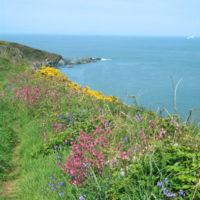
- Flowers on the Coast PathDescription: Sea Campion, pink campion, bluebells, gorse and ferns. Season: spring Colour: multicoloured More Information: One of the true pleasures of a spring visit to Cardigan Bay are the fabulous range of wild flowers. Location: Walking from Mwnt to Aberporth along the Ceredigion Coast Footpath.
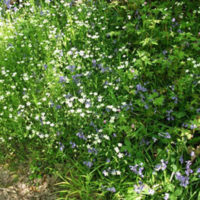
- StitchwortCommon Name: Stitchwort Latin Name: Stellaria graminea Description: Small delicate flower with star shape Season: spring Colour: white More Information: Location: Seen here with bluebells but often with campion too. This photo was taken on the coast path
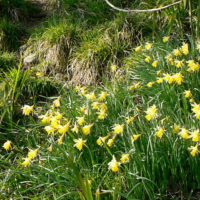
- Wild DaffodilCommon Name: Wild Daffodil Latin Name: Narcissus pseudonarcissus Description: Wild daffodils are shorter than the long stemmed cultivated plants. They grow in small clumps, often at the base of trees and hedges. Season: Late Winter - Early Spring Colour: Yellow More Information: During the 19th Century the daffodil seems to have replaced the leek as the plant of Wales, possibly because it flowers around March 1st - St. David's Day, and it is so beautiful Location: Very early close to the coast - the Parrog at Newport or track to Penbryn Beach. Later in spring almost any shaded riverbank and lane.
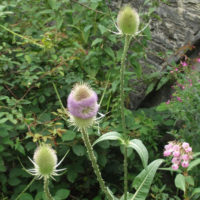
- TeaselCommon Name: Teasel Latin Name: Dipsacus fullonum Description: Remarkable flower whose dried heads feel like velcro. The tiny flowers appear around the teasel in a ring which then expands until the whole flower head is covered. Season: spring Colour: Pink More Information: Traditionally teasel heads were used to comb the wool fibres in the woollen industry which is one explanation of their spread along the streams and rivers where wool has historically been spun or woven. Drefach Felindre used to be a very renowned wool area. Location: Along the banks of the Teifi. This photo was taken under the bridge at at Cenarth.
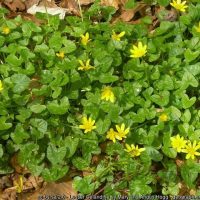
- Lesser CelandineCommon Name: Lesser Celandine Latin Name: Ficaria verna Description: It has fleshy dark green, heart-shaped leaves and distinctive flowers with bright yellow, glossy petal Season: Spring Colour: Yellow More Information: Location: Again common on roadsides and lanes and often found in large areas of woodland
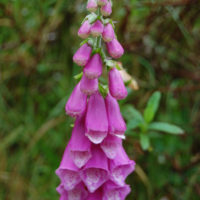
- FoxgloveCommon Name: Foxglove Latin Name: Digitalis purpurea Description: Tall, sometimes over 2 metres Season: summer Colour: Purple More Information: The scientific name means 'finger-like' and refers to the shape of the flowers which fit onto the ends of your fingers, like finger gloves. Location: Often found in the banks along the sides of lanes
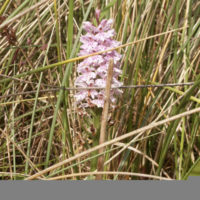
- Common Spotted OrchidCommon Name: Common Spotted OrchidLatin Name: Dactylorhiza fuchsii Description: Beautiful short but sturdy flower Season: summer Colour: pale pink More Information: Thank you for the response now have the flower identified and common spotted orchid. Location: Photographed in the sand dunes behind Poppit Sands
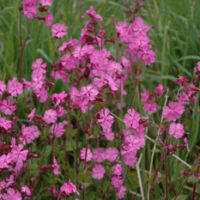
- CampionCommon Name: Campion Latin Name: Melandrum rubrium Description: Deep pink flowers 20mm across with notched petals and soft hairy leaves and stem. Season: Spring and Summer Colour: Pink More Information: Location: Roadside and footpaths, just about anywhere that grass has not been cut back in spring.
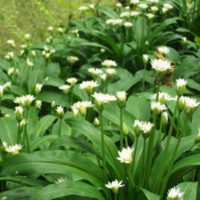
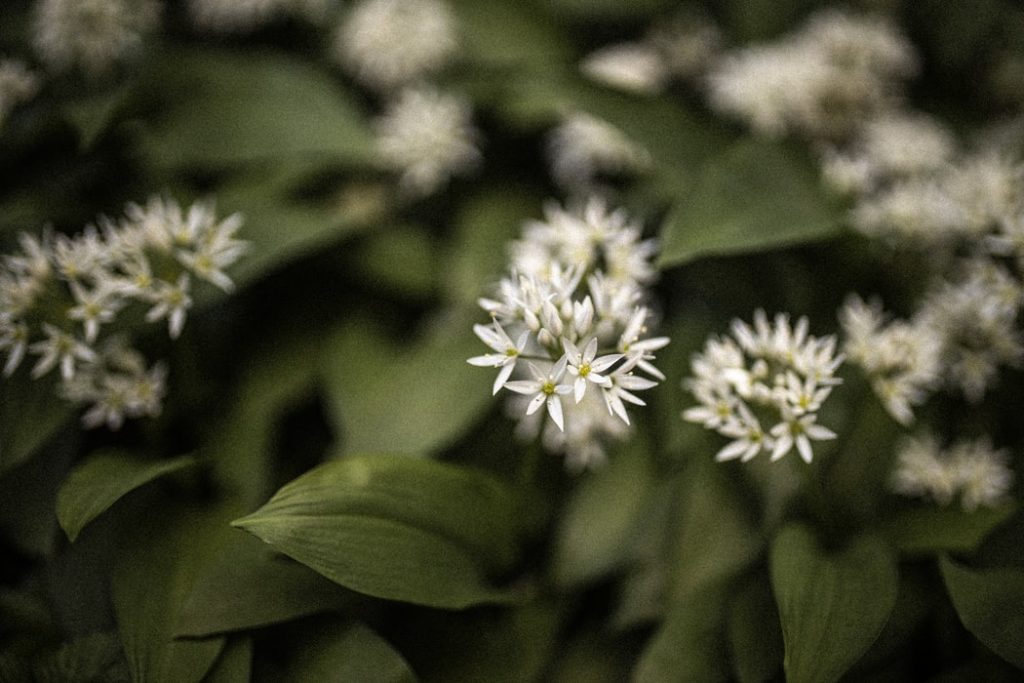
- Wild GarlicCommon Name: Wild Garlic Latin Name: Allium ursinum Description: Star like white flowers with distinct garlic scent from leaves and flowers. The leaves are thick and smooth. Season: spring Colour: white More Information: Also called broad-leaved garlic and wood garlic. You can eat wild garlic leaves in salads or boiled as a vegetable for soup, also as a substitute for basil. There is a lovely article in the Guardian about wild Garlic in Ceredigion with lots of extra images. Location: Woodland and river banks. The flowers above were photographed in the woods, inland from Cwmtydu
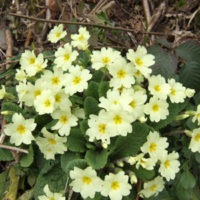
- PrimrosesCommon Name: Wild primroses Latin Name: Primula vulgaris Description: Perennial growing 10–30 cm tall, with a basal rosette of leaves which are more-or-less evergreen in favoured habitats on Welsh roadsides. Season: Spring Colour: Pale Yellow More Information: The primrose is one of the earliest spring flowers Location: Along roadsides and lanes and prolific along the river Teifi
If you are visiting The National Botanical Gardens or Aberglassney, The Garden Lost in Time, why not stay on the coast around Cardigan Bay. Enjoy the natural delights of this peaceful, un-crowded area. See the bottlenose dolphins and other marine wildlife. For full information on open gardens including opening times and facilities see The National Garden Scheme website www.ngs.org.uk